

Patient acquisition in telehealth is expensive and getting more expensive. When it costs $150-$900 to acquire a single patient, the math only works if you maximize the revenue each patient generates, not just on the first transaction, but across the entire relationship.
Upselling and cross-selling in telehealth isn't about being pushy. It's about offering relevant, clinically aligned additions that improve patient outcomes and increase lifetime value simultaneously. Operator programs we've worked with see meaningful revenue lifts per patient cycle without materially impacting conversion rates.
Why Telehealth Upsells Are Different From E-Commerce Upsells
In standard e-commerce, upsells are about impulse: 'Customers also bought...' works because the purchase is low-stakes. In telehealth, the dynamics are completely different. Patients are making healthcare decisions, and anything that feels like a sales tactic triggers skepticism and can tank conversion.
Effective telehealth upsells succeed because they're framed as clinical recommendations, not product suggestions. The patient trusts the provider. When the checkout flow presents a lab panel as 'Your provider recommends baseline labs before starting treatment,' it feels like care. When it presents the same panel as 'Add to cart for $149,' it feels like a sales pitch.
The 5 Highest-Converting Telehealth Upsell Categories
1. Lab Panels and Diagnostic Testing
This is the most natural upsell in telehealth because it's genuinely clinical. Before starting GLP-1, TRT, or HRT treatment, providers should ideally review baseline labs. Offering a lab panel at checkout is both medically sound and commercially valuable.
- At-home lab kits (via Health Gorilla, Tasso, LetsGetChecked, Everlywell), convenient and premium-priced
- In-lab orders through Labcorp or Quest, lower cost, broader panel options
- Ongoing monitoring labs at 30/60/90-day intervals, recurring revenue
- Typical pricing: $49-$199 per panel; attach rates vary by program and positioning
2. Supplements and Nutraceuticals
Supplements that support the primary treatment (B12 and protein supplements for GLP-1 patients, DHEA for TRT patients, probiotics for general wellness) are high-margin add-ons that patients genuinely benefit from. The DTC supplement market is massive, and telehealth brands are uniquely positioned because patients trust their provider's recommendations.
The key is curation. Don't offer a catalog of 50 supplements. Offer 2-3 that are specifically relevant to the patient's treatment program, recommended by the clinical team, and available through your pharmacy or fulfillment partner.
3. Program Tier Upgrades
This is the classic upsell: the patient starts with the basic plan and you offer a premium tier with additional features. In telehealth, premium tiers typically include more frequent provider check-ins, dedicated care coordinators, coaching or nutritionist access, and priority messaging.
The most effective implementation is anchoring the standard plan as the default and presenting the premium tier as 'enhanced support' with a specific price difference (not just a higher total). Patients who are nervous about starting a new treatment are more likely to opt for extra support.
4. Add-On Clinical Services
- TRT or HRT added to a GLP-1 program: Cross-selling complementary treatments to patients already in your ecosystem
- Mental health support: Many GLP-1/weight loss patients benefit from counseling around body image and habit change
- 24/7 urgent care access: Low-cost add-on that provides peace of mind and reduces ER visits
- Nutritionist or health coaching sessions: High perceived value, can be delivered asynchronously
5. Pre-Shipment and Refill Cycle Upsells
Some of the highest-converting upsells happen not at initial checkout but at refill time. When a patient is confirming their next month's shipment, that's a natural moment to offer add-ons: 'Add a 30-day supply of B12 to your next shipment?' This approach can add meaningful additional revenue per refill cycle in well-run programs.
Implementation: Where Upsells Live in the Flow
Placement matters as much as the offer itself. Here's where upsells convert best without disrupting the primary conversion:
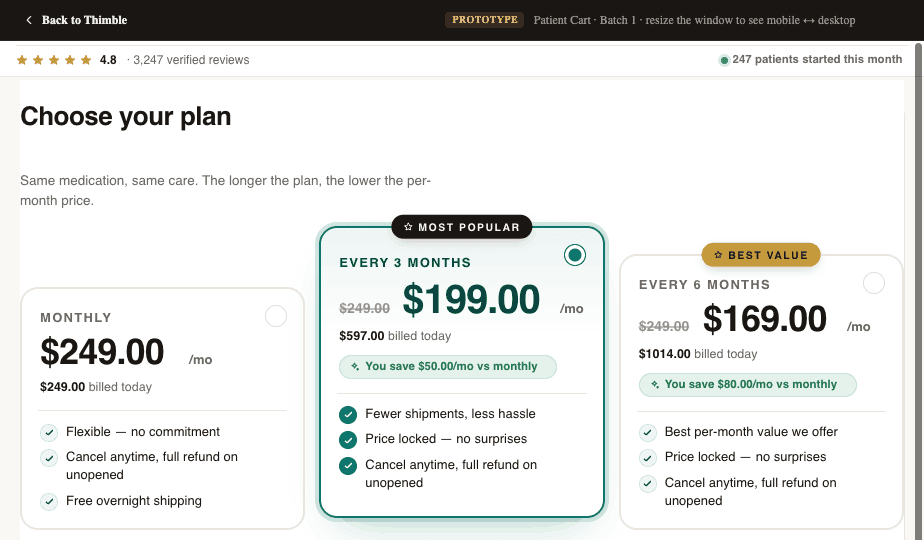
- 01.Plan selection page: Tier comparison with a 'recommended' badge on the premium option. No friction added, just better framing.
- 02.Post-plan, pre-payment: After selecting a plan, show 1-2 relevant add-ons (labs, supplements) with one-click add. Easy to skip.
- 03.Confirmation page: After payment, offer add-ons that can be billed to the same payment method. Lower conversion but zero risk to primary sale.
- 04.Post-purchase email: Follow up with relevant add-ons 24-48 hours after initial purchase. Gives patients time to research.
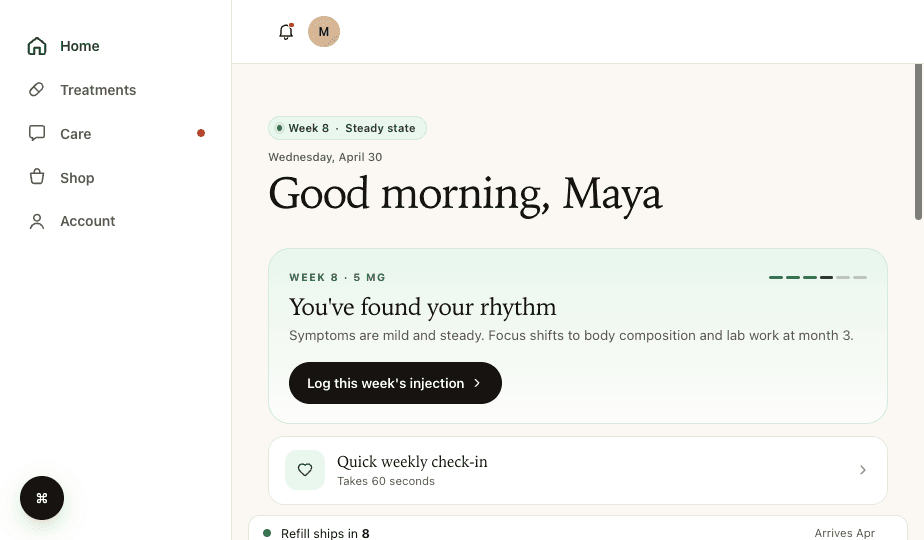
- 05.Refill cycle: In the patient portal during refill confirmation. Highest context, highest conversion.
The Math: How Upsells Change Unit Economics
Let's walk through a simplified example for a GLP-1 program:
- Base plan: $199/month
- Lab panel at checkout (35% attach): $149 one-time → adds ~$52 revenue per patient on average
- Supplement add-on (20% attach): $39/month → adds ~$8 revenue per patient per month
- Premium tier upgrade (15% of patients): $299/month vs $199/month → adds ~$15 revenue per patient per month
- Total: base $199 becomes ~$222/month + $52 at acquisition
That's an 11% increase in monthly revenue per patient and a 26% increase in first-month revenue, with no additional acquisition cost. Over 6 months of average patient lifetime, it adds roughly $190 in revenue per patient, enough to meaningfully shift your payback period on acquisition costs.
Common Mistakes to Avoid
- Too many options at checkout: Offer 1-2 add-ons, not a catalog. Choice overload kills conversion in healthcare.
- Upselling before trust is established: Never upsell on the first page of the flow. Let the patient commit to the primary program first.
- Clinically irrelevant add-ons: Every upsell should have a clinical justification. If your care team wouldn't recommend it, don't offer it.
- Making add-ons hard to decline: Dark patterns destroy trust. The 'No thanks' option should be as visible and easy as the 'Add' button.
- Ignoring the refill cycle: Most operators optimize checkout upsells and completely ignore the monthly refill touchpoint, which is actually the higher-converting moment.
The Bottom Line
Upselling in telehealth isn't about squeezing more money from patients. It's about offering genuinely valuable additions at the right moments in the patient journey. Labs improve clinical outcomes. Supplements support treatment. Premium tiers provide better care. When done right, patients appreciate the options rather than resenting them.
The technical requirement is a checkout and portal infrastructure that supports add-ons natively: plan tiers, one-click attachments, refill-cycle offers, and subscription flexibility. If your checkout is a generic Stripe link or a platform template, you're leaving significant revenue on the table.
Frequently Asked Questions
- What is a good upsell attach rate in telehealth?
- Attach rates vary widely by program, positioning, and patient cohort. Lab panels positioned as clinical recommendations tend to see the highest attach rates; supplements and premium tier upgrades vary. Pre-shipment refill add-ons typically convert better than checkout upsells because trust is already established. Telehealth upsells generally outperform e-commerce averages when framed as clinical benefits rather than impulse purchases.
- Do upsells hurt telehealth checkout conversion rates?
- Not if implemented correctly. The key is placement and simplicity: offer 1-2 relevant add-ons after plan selection, make them easy to skip, and never gate the primary purchase behind upsell decisions. Well-designed upsell flows have negligible impact on primary conversion while adding meaningfully to revenue per patient in well-run programs.
- Should upsells happen at checkout or post-purchase?
- Both, but for different reasons. Checkout upsells capture impulse and context (the patient is already in buying mode). Post-purchase and refill-cycle upsells convert better because trust is already established. The highest-performing programs use a combination: 1-2 options at checkout, a follow-up email 24-48 hours later, and refill-cycle offers in the patient portal.
Building a telehealth brand?
Thimble Hub gives you the checkout, intake, patient portal, and EHR-routing infrastructure so you can launch in weeks, not quarters. Modular, HIPAA-ready, no lock-in.