

If you're running a telehealth company and you want to run paid ads on Google, Meta, Bing, or TikTok, there's a gatekeeper you can't skip: LegitScript. Without LegitScript certification, these platforms will reject your ad accounts outright. No exceptions, no workarounds, no amount of spending will change the policy.
This isn't a nice-to-have credential. It's a hard prerequisite for the advertising channels that drive the majority of patient acquisition in telehealth. Yet most operators we talk to either don't know about it until their first ad gets rejected, or treat it as a checkbox to rush through, and end up denied.
This guide breaks down what LegitScript is, which platforms require it, exactly what the certification process involves, what it costs, and, critically, the reasons applications get denied and how to avoid them.
What Is LegitScript and Why Does It Exist?
LegitScript is a third-party verification organization founded in 2007 that validates the legitimacy, safety, and compliance of businesses in regulated healthcare industries. Think of it as the trust layer between healthcare companies and the advertising platforms that serve them.
The major ad platforms partnered with LegitScript specifically because they needed a way to vet healthcare advertisers without building in-house medical compliance teams. Rather than trying to evaluate thousands of telehealth companies themselves, Google, Meta, and others outsource that judgment to LegitScript.
This arrangement means LegitScript holds enormous power. Their certification is the key that unlocks paid acquisition for telehealth, online pharmacy, addiction treatment, and CBD companies. Without it, you're limited to organic traffic, referrals, and the handful of channels that don't require verification.
Which Platforms Require LegitScript Certification?
- Google Ads: Required for telehealth, online pharmacy, addiction treatment, and CBD advertising. Google will not approve healthcare ad campaigns without an active LegitScript certification.
- Meta (Facebook/Instagram): Required for online pharmacy, telehealth, and CBD ads. After LegitScript certification, you must also complete a separate Meta authorization process.
- Microsoft/Bing Ads: Required for all healthcare advertising categories.
- TikTok Ads: Required for telehealth and healthcare-related advertising.
What Does LegitScript Evaluate?
LegitScript's certification covers 11 critical standards spanning registration, compliance, patient services, and treatment practices. They're not just checking that your website looks professional. They're verifying that your business operates legally and ethically across every dimension.
- Valid business registration and licensing in every state you operate in
- Current healthcare provider credentials for all clinicians on staff
- Compliant marketing and advertising, with no misleading claims, no deceptive pricing
- Appropriate patient identity verification and consent processes
- Prescription drug advertising compliance (if applicable)
- HIPAA-compliant data handling and privacy practices
- Transparent refund and cancellation policies
- Legitimate clinical protocols and treatment standards
- Background checks on key personnel
- Website content accuracy and regulatory compliance
- Payment processing practices and transparency
The Certification Process Step by Step
Here's what the process actually looks like from application to approval:
- 01.Application submission: You fill out LegitScript's application form and provide documentation: business licenses, provider credentials, policies, marketing materials, and website URLs.
- 02.Fee payment: Application fee is $975 per website (one-time, nonrefundable).
- 03.Pre-assessment review: LegitScript reviews your documentation for completeness. This takes 1-2 weeks. If anything is missing, they'll ask for it, and the clock resets.
- 04.Compliance verification: A detailed review of your operations, website, marketing materials, and clinical practices against their 11 standards. This may include requests for additional documentation.
- 05.Background checks: Key personnel (founders, medical directors, compliance officers) are screened.
- 06.Decision: Approval with seal issuance, conditional approval with required fixes, or denial with reasons.
How Long Does It Take?
Standard timeline is 4-8 weeks, but complex applications (multiple states, controlled substances, pharmacy operations) can stretch to 2-4 months. LegitScript offers expedited processing that starts review within 2 business days for an additional fee; the overall timeline still depends on the complexity of your application and any back-and-forth on documentation.
What Does It Cost?
- Application fee: $975 per website (one-time, nonrefundable)
- Annual certification fee: $2,150/year per website (includes ongoing monitoring)
- Probationary certification: $3,995/year
- Expedited processing: starts review within 2 business days ($2,500 additional fee per application)
These fees are trivial relative to the ad spend they unlock. If you're spending even $5,000/month on paid acquisition, the ROI on certification is obvious.
The 7 Most Common Reasons Applications Get Denied
We've worked with dozens of telehealth companies through the certification process. The same denial reasons come up repeatedly:
- 01.Incomplete documentation: Even small omissions cause delays or outright denials. Missing a single state license, an expired credential, or an unsigned BAA can kill your application.
- 02.Misleading website content: Claims that overstate efficacy, hide side effects, or use before/after imagery without proper disclaimers. LegitScript reviews every page of your site.
- 03.Missing or expired licenses: Every state you operate in needs current, valid healthcare licenses. One lapsed license means denial.
- 04.Inadequate patient verification: Your intake process must verify patient identity and confirm eligibility for treatment. A generic form without identity verification won't pass.
- 05.Non-compliant advertising: If your existing ads (even organic social posts) make claims that violate platform ToS or pharmaceutical advertising rules, LegitScript will flag them.
- 06.Subdomain confusion: LegitScript treats each subdomain as a separate website requiring separate certification. If you run shop.yourdomain.com and portal.yourdomain.com, each needs its own application.
- 07.Prescription drug advertising violations: Specific rules govern how you can mention medication names, dosages, and outcomes. Getting this wrong is one of the fastest paths to denial.
How Your Website Design Affects Certification
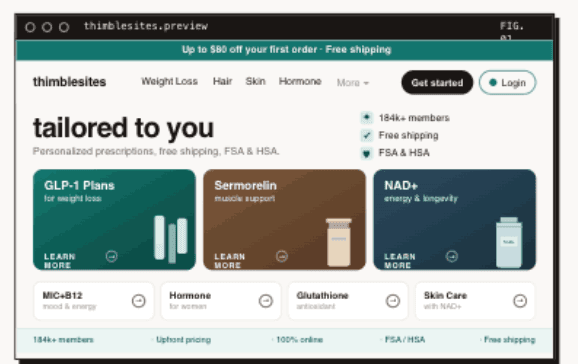
This is where most operators are surprised: your website itself is a major factor in LegitScript's evaluation. They review every page for compliance, accuracy, and transparency. A website that looks professional but contains compliance issues will get flagged just as fast as one that looks sketchy.
Specifically, LegitScript looks for:
- Clear identification of the business entity, including physical address and contact information
- Provider credentials and licensing information that patients can verify
- Accurate descriptions of services and treatments offered
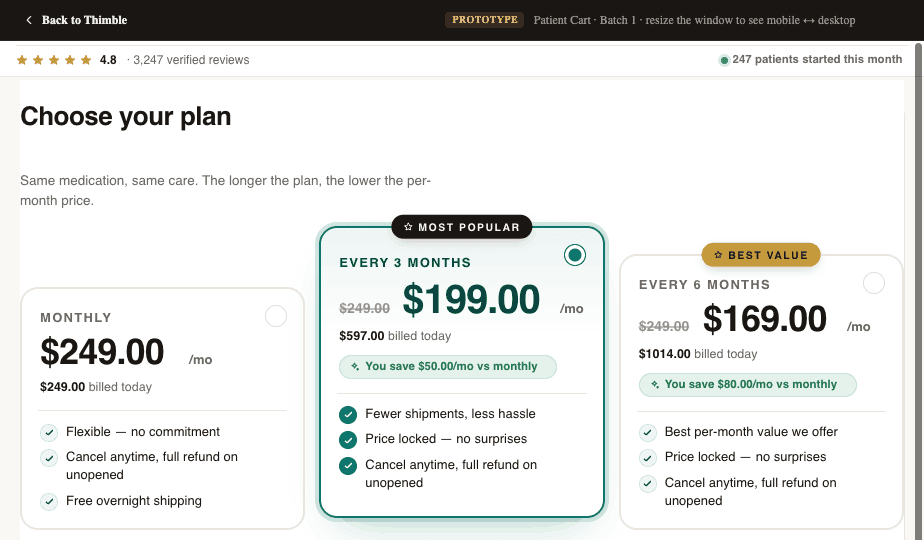
- Transparent pricing with no hidden fees
- Compliant medication references, with no unapproved claims about efficacy or outcomes
- Accessible privacy policy and terms of service
- HIPAA compliance indicators throughout the patient-facing experience
- No deceptive design patterns (dark patterns) in checkout or intake flows
After Certification: Maintaining Your Status
Certification isn't a one-time event. LegitScript conducts ongoing monitoring of certified businesses, which means your compliance needs to be continuous, not just good enough to pass the initial review.
- Website changes are monitored, and significant updates to your site may trigger a review
- Advertising compliance is tracked across platforms
- License expirations are flagged, and you'll need to update credentials proactively
- Patient complaints can trigger re-evaluation
- Annual renewal requires confirming continued compliance
The practical implication: every website update, new marketing campaign, or operational change should be reviewed through a compliance lens. This is easiest when your website and marketing infrastructure are built with compliance as a core principle, not a layer added on top.
Platform-Specific Steps After Certification
Google Ads
After LegitScript certification, you submit your certification ID through Google's healthcare advertiser verification form. Google cross-references with LegitScript and typically approves within 5-10 business days. You'll then be able to run ads in approved healthcare categories.
Meta (Facebook/Instagram)
Meta has a separate authorization process on top of LegitScript certification. You submit your LegitScript certification through Meta's Business Help Center, and Meta conducts its own review. This can take an additional 1-2 weeks. Once approved, you can run ads in Meta's restricted healthcare categories.
The Bottom Line
LegitScript certification is non-negotiable for any telehealth company that wants to grow through paid advertising. The process is straightforward but unforgiving of sloppy preparation. Get your documentation complete, make sure your website is compliant from top to bottom, and submit a clean application.
The companies that get certified fastest are the ones that build compliance into their infrastructure from the start: websites designed for certification, intake flows that meet verification requirements, and marketing content that passes scrutiny without revision. Trying to retrofit compliance after denial is always slower and more expensive than getting it right the first time.
Frequently Asked Questions
- How long does LegitScript certification take?
- Standard processing takes 4-8 weeks. Complex applications (multiple states, controlled substances) can take 2-4 months. Expedited processing is available for an additional fee and starts review within 2 business days; the overall timeline still depends on application complexity and documentation completeness. The biggest variable is documentation quality, as incomplete applications add 1-2 weeks per back-and-forth cycle.
- How much does LegitScript certification cost?
- The application fee is $975 per website (one-time, nonrefundable). The annual certification fee is $2,150 per website. Probationary certification is $3,995/year. Expedited processing (which starts review within 2 business days) costs an additional $2,500 per application. These fees are minimal compared to the ad spend they unlock.
- Can I advertise on Google without LegitScript certification?
- No. Google requires LegitScript certification for telehealth, online pharmacy, addiction treatment, and CBD advertising. There is no alternative verification pathway and no exceptions to this policy.
- Does each subdomain need separate certification?
- Yes. LegitScript treats each subdomain as a separate website. If you operate shop.yourdomain.com and portal.yourdomain.com, each requires its own application and certification. This is a common surprise that delays launches.
Building a telehealth brand?
Thimble Hub gives you the checkout, intake, patient portal, and EHR-routing infrastructure so you can launch in weeks, not quarters. Modular, HIPAA-ready, no lock-in.